What is RISC-V, really?
To understand why this transition is so significant, we need to briefly clarify how microcontrollers work. Most processors (such as those in our laptops or smartphones) are based on proprietary instruction set architectures (ISA). When a manufacturer like Espressif wants to build a chip with ARM or Xtensa cores, it has to pay expensive licensing fees to the respective company.
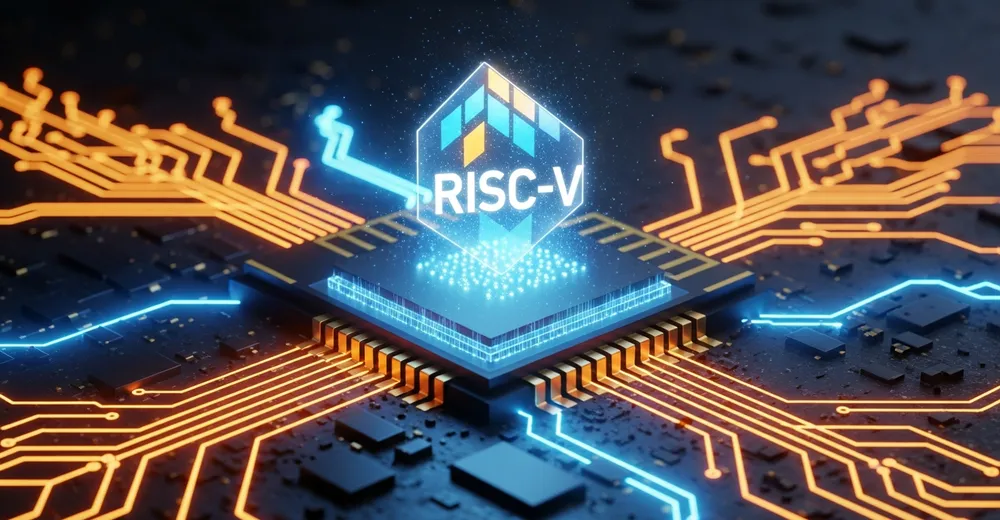
RISC-V (pronounced "Risk-Five"), on the other hand, is a completely open standard. Anyone is allowed to build processors based on RISC-V without paying licensing fees. It is essentially the Linux of hardware architectures.
Ad · Affiliate link – if you buy through it, I may earn a commission. It doesn’t change the price for you.

Why is Espressif switching?
The classic ESP8266 and the early ESP32 still used cores from Tensilica (Xtensa). With the announcement that it will exclusively rely on RISC-V going forward, Espressif dropped a real bombshell in the industry. There are several good reasons for this:
- No licensing costs: Espressif saves millions in licensing fees. For us as end customers that means the chips can still be offered extremely cheaply (often under 3 euros).
- More control: Since the architecture is open source, Espressif can tailor the chip exactly to its own needs (e.g. AI computations or an extreme low-power mode) without depending on a third party's updates.
- Security & flexibility: An open architecture can be reviewed for vulnerabilities by the global community.
The new stars: ESP32-C3 and ESP32-C6
The effects of this change are already noticeable in the market. Two of the most popular new boards are already based entirely on RISC-V:
- ESP32-C3: Positioned as the direct successor to the old ESP8266. It has a single RISC-V core, Wi-Fi, Bluetooth 5 (LE) and is extremely power-efficient. Currently the first choice for simple smart home sensors.
- ESP32-C6: The current flagship in terms of connectivity. It not only uses the latest Wi-Fi 6 (802.11ax) standard, but also supports Zigbee 3.0 and Thread. That makes it the perfect basis for Matter-compatible devices in the smart home!
What does this mean for our existing projects?
The good news for all tinkerers: nothing changes at first.
The ecosystem around Espressif – above all the ESP-IDF (Espressif IoT Development Framework) and the Arduino IDE – absorbs the architecture change entirely in the background. Your C++ code or your ESPHome YAML configuration can, in 99% of cases, be compiled for a new RISC-V chip without you changing a single line of code. The compiler (e.g. GCC) simply knows which architecture it has to translate the ones and zeros for.
Conclusion: a win for the maker scene
That one of the biggest players in the IoT market is switching its entire product line to open-source hardware is a massive vote of confidence for RISC-V. For us tinkerers it mainly means future-proof, extremely affordable and modern hardware (think: Wi-Fi 6 and Zigbee on a single chip). So next time you buy a development board for your Home Assistant project, check whether it already says "C3" or "C6" on it – because if it does, you're already holding a genuine RISC-V processor in your hands!
Ad · Affiliate link – if you buy through it, I may earn a commission. It doesn’t change the price for you.